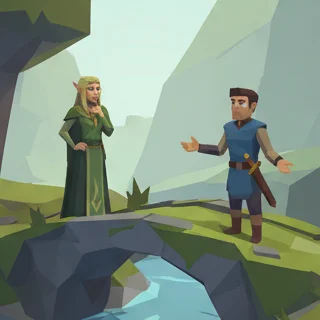










From Scenario to Practice Session
The Agent node holds the character's background, for example a team member who has missed three deadlines and feels overlooked, while Personality and Emotion nodes set who they are and how they start. A knowledge base adds the facts of the case that learners should find out by asking. Together with conversation flows and voice, this makes the following possible:
- •The character's mood moves during the conversation, so an upset colleague can calm down or dig in depending on what the learner says.
- •Start, Checkpoint and End nodes keep the open conversation on its learning goal, with several entry and exit points so one scenario covers different openings and endings.
- •Group chat runs up to six characters in one conversation, for a mediation between two colleagues or a panel interview, and the learner can take one of the roles.
Each checkpoint the learner reaches comes back as a keyword, and the Web API returns the conversation history, so your app can store how far each learner got and the transcript for a coach to read.
Practice Without Booking People
Every learner gets a conversation partner at any hour, without a trainer or an actor in the room, and a nervous learner can fail in private before trying it with a person. The same brief and stages apply to every learner, and another attempt is simply a new session. Neocortex does not grade the learner: what you record and review is up to you, whether the role-play runs on a course page, in a desktop app or in a headset.