Minecraft AI NPC Mod: Talking Villagers and Voice Commands
Quick answer: yes, on Java Edition. A Minecraft AI NPC mod on Fabric or NeoForge can send what a villager sees and hears to a Neocortex character, then turn the reply into subtitles, voice and trades.
Minecraft villagers grunt, shuffle and trade through a fixed menu, and modders have been trying to make them talk for years. With Neocortex, each villager gets a personality, a memory of the player and a voice, and acts on what is said. Add Conversation Flows, a quiz engine and on-device voice commands, and the same mod can run a classroom lesson or a helper who follows spoken orders.
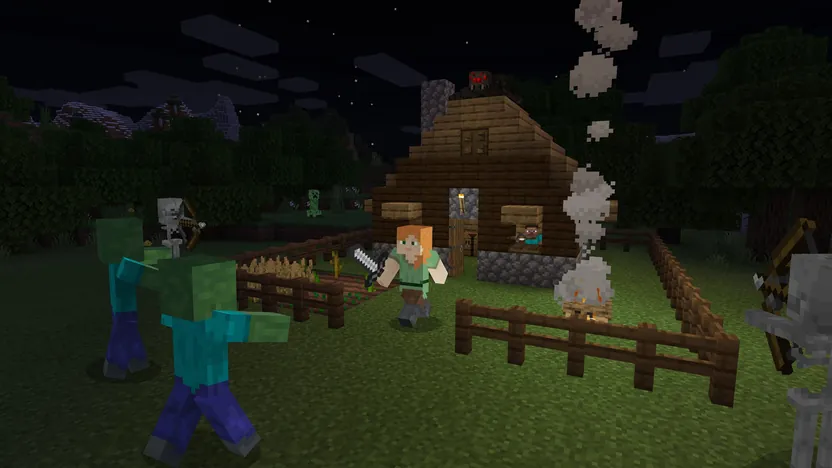 Screenshot: Minecraft © Mojang Studios
Fabric vs NeoForge
Java Edition mods are Java jars loaded by a mod loader. Either of the two main loaders works for a talking villager:
| Loader | Fabric | NeoForge |
|---|---|---|
| Style | Lightweight and modular, with the Fabric API library | Full-featured |
| Docs | Developer docs | Documentation |
| Project setup | Mod template generator | Mod generator |
Both track new releases closely. Minecraft 26.1 and newer run on Java 25, and since 26.1 the game ships without obfuscation, so mods work against Mojang's own names. Mods are usually published on Modrinth or CurseForge. Community mods already add chat-based AI companions to Minecraft; what follows is what a Neocortex mod looks like.
Server side or client side?
Where code runs matters more than which loader you pick.
The server owns villagers, inventories and trades, and is the natural place to call a web API. Java's built-in HttpClient handles the network calls, and Gson already ships with the game for JSON.
The client owns the microphone, subtitles (a chat line or a HUD overlay) and audio playback, which can use Java's own audio APIs for a WAV reply.
So a typical split: the server sends each villager conversation to Neocortex through /v3/chat and runs the actions that come back, while the client plays the voice from /v3/audio/generate or /v3/audio/stream and listens for voice commands.
A chat call in Java
A minimal chat call from a Fabric or NeoForge mod, sent off the main thread:
JsonObject body = new JsonObject();
JsonArray ids = new JsonArray();
ids.add(config.characterId());
body.add("characterIds", ids);
body.addProperty("message", playerText);
body.addProperty("playerId", player.getStringUUID());
body.addProperty("sessionId", sessionId); // "" on the first call

HttpRequest req = HttpRequest.newBuilder(URI.create("https://api.neocortex.link/v3/chat"))
    .header("x-api-key", config.apiKey())
    .header("Content-Type", "application/json")
    .POST(HttpRequest.BodyPublishers.ofString(body.toString()))
    .build();

HTTP.sendAsync(req, HttpResponse.BodyHandlers.ofString()).thenAccept(res -> {
    JsonObject reply = JsonParser.parseString(res.body()).getAsJsonObject();
    sessionId = reply.get("sessionId").getAsString();
    // messages[0].lines -> subtitles; actions -> run them back on the server thread
});
Characters behind that call are built in a visual node editor with personality, emotion, knowledge, language and voice nodes. Up to six characters can share one conversation on Pro and Team plans, enough for a village council. For how this compares with other AI character platforms, see our comparison page.
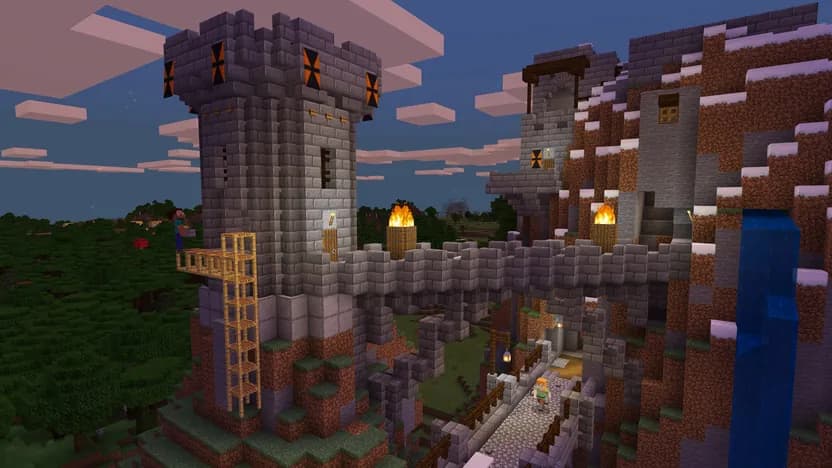 Screenshot: Minecraft © Mojang Studios
Three NPCs for a Minecraft AI NPC mod
The librarian and the farmer
A librarian who remembers you saved the village from a raid, and gives you a better price on that enchanted book because of it. A farmer who complains about the creeper hole in his wheat field and asks you to fix it before he sells you carrots.
Your mod sends the facts with each message: the villager's profession, the player's emeralds, reputation, nearby blocks and recent events like "raid defeated".
The character answers with text, an emotion tag and actions like { "name": "OFFER_TRADE", "targetId": "enchanted_book" }. Your mod opens the trade screen with that offer, so the conversation and the economy stay linked.
A teacher at the front of the class
On a class's Java server, a teacher NPC stands at the front of a build and explains a topic in plain words. Upload the lesson notes as a PDF to the character's Knowledge node and it answers from them.
Then it runs a quiz: redstone logic gates, biomes and climates, or vocabulary for a language class, in any of 20+ languages.
The quiz engine (Team plan) handles the questions, scoring and a leaderboard through /v3/quiz, and your mod hands out a reward block or opens a door when a student passes.
Conversation Flows fit guided lessons too: the teacher walks students through checkpoints and your mod opens the next room on each flowState keyword.
Pip, the helper who listens
Give your mod a helper NPC called Pip, and design a command set with actors ("Pip", "everyone"), actions ("follow", "wait", "chop", "mine", "bring") and objects ("me", "oak logs", "iron", "that tree").
"Bring me sixteen oak logs" arrives as one command with the quantity attached. "Chop that tree and then follow me" arrives as two. The Neocortex Voice Commands library matches phrases on the player's PC without a cloud round trip, so Pip reacts the moment you stop talking, even mid-fight. Our post on on-device voice commands for game mods covers the voice side in more depth.
First villager checklist
- Pick a loader. Set up a Fabric or NeoForge mod project from the official generator.
- Design the characters in the Neocortex dashboard: one per villager profession, a teacher with lesson notes, a question set for the quiz. Test them in the browser.
- Design a command set for your helper NPC, with a few example phrases per action.
- Connect from the mod. Call
/v3/chatasynchronously, reuse thesessionId, and map returned actions to game code. - Keep the API key in a config file the player or server admin fills in, never hard-coded in a shared mod.
- Test in a single-player world first, with push-to-talk, before inviting a class.
Voice Commands is a licensed SDK: contact us for a Voice Commands license.
Servers, classrooms and fair play
Keep the mod free and follow Mojang's Minecraft Usage Guidelines and EULA. Use it in single-player worlds or on private servers where every player has opted in, never on public servers against their rules. For classrooms, check your school's rules on student data before connecting any online service. Each player or server uses its own Neocortex API key.
The short version
Pick a loader, keep the API call on the server, and start with one villager profession. Once the librarian talks and trades through Neocortex, the teacher and Pip reuse the same pieces.
Building for a cozier game? See our Stardew Valley AI villager mod guide, or browse every game in our AI NPC and voice command mods index.
Tool versions and links checked October 2026. Modding tools change often; check each project's page for the latest release.
Frequently Asked Questions
Can you add AI NPCs to Minecraft?
Yes, on Java Edition. A Fabric or NeoForge mod can send what a villager sees and hears to an AI service and show the reply in game. Neocortex characters answer in character and return actions, such as opening a trade, that your mod runs.
Can Minecraft villagers talk with AI?
A mod can give each villager profession its own Neocortex character, so a librarian, a farmer and a cleric all speak differently. The mod sends the player's emeralds, reputation and nearby blocks with each message, and the villager answers and offers trades through actions.
Can teachers use AI NPCs in Minecraft classrooms?
On a Java Edition server, yes. A teacher NPC built with Neocortex can explain a topic from uploaded lesson notes and run scored quizzes with a leaderboard. Minecraft Education is a separate edition, so Fabric and NeoForge mods do not apply there.
Can I control a Minecraft NPC with my voice?
Yes. Neocortex Voice Commands runs on the player's PC, matches natural phrases like "bring me sixteen oak logs" offline, and hands your client mod the command and quantity. Voice Commands is a licensed SDK, so contact us for a license.
Written by
Sercan Altundas
Date
Oct 20, 2026
Read time
6 min